

Mirror Wills for Couples in Ontario: Why Spouses Should Consider Them
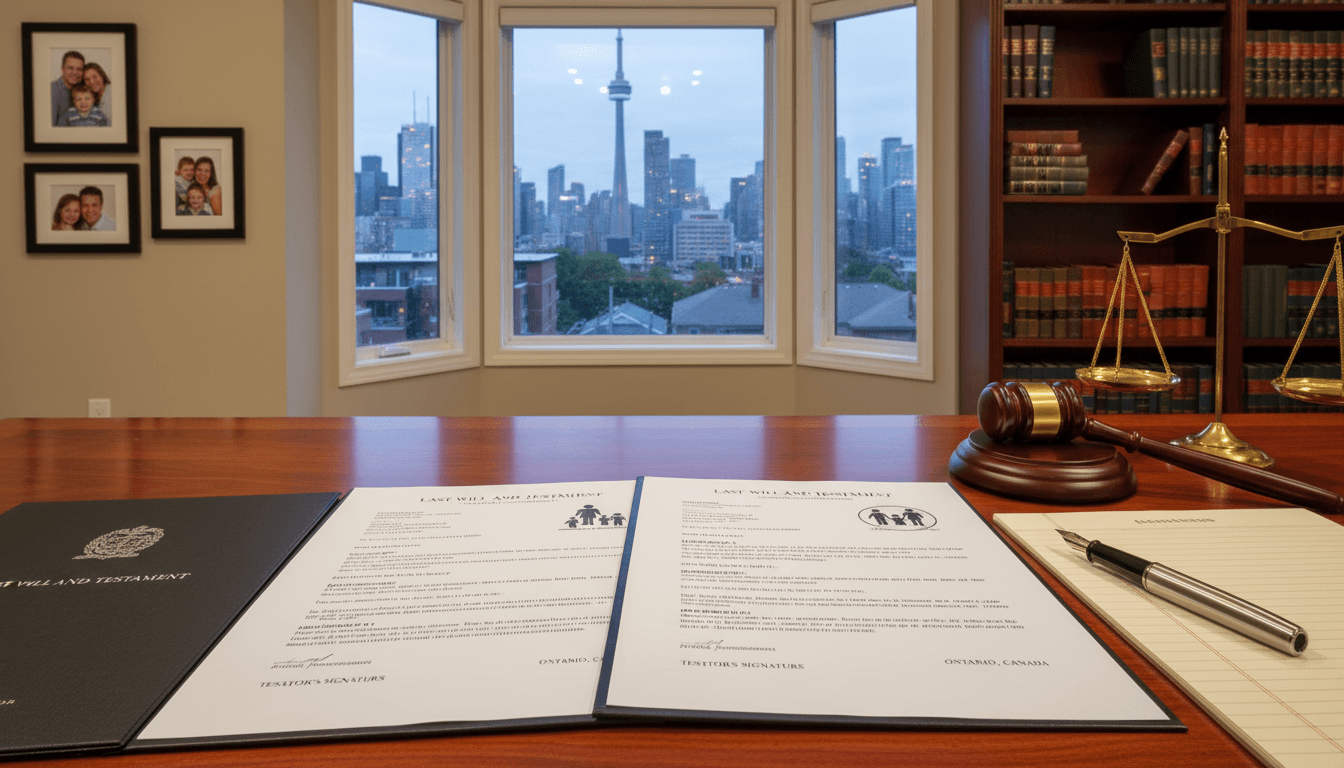 "Mirror Wills for Couples in Ontario: Why Spouses Should Consider Them")
Estate planning between spouses often starts with good intentions and then stalls. Life is busy, and decisions feel distant. Yet when one partner dies without a plan, the emotional and financial impact hits fast.
Mirror Wills for Couples are a common approach in Ontario: two nearly identical wills, usually leaving everything to the surviving spouse and then to children or other beneficiaries. While the concept seems simple, this simplicity can be misleading.
For many households, Mirror Wills provide clarity, cost efficiency, and coordination. For others, careful adjustments may be needed. Understanding their role matters.
What Are Mirror Wills?
At their core, Mirror Wills for Couples are two separate legal documents drafted in similar or “mirrored” terms. Each spouse leaves their estate to the other. Upon the second death, assets pass to agreed beneficiaries, often children.
Mirror Wills vs Mutual Wills
The distinction is important. Mutual wills create a binding agreement that neither party can change after one dies. Mirror wills do not. Each spouse retains the freedom to revise their will independently during their lifetime.
This flexibility is often seen as a strength, but it can also introduce risks.
Ontario Legal Context
Ontario estate planning is governed primarily by the Succession Law Reform Act. If someone dies without a valid will, provincial intestacy rules determine who inherits. A surviving spouse may receive a preferential share, but the distribution becomes more complex when children are involved.
Mirror Wills for Couples in Ontario can allow spouses to override default distribution rules and decide in advance how their assets should be distributed.
Why Ontario Couples Gravitate Toward Mirror Wills
For long-term spouses with shared goals, mirrored documents often reflect how they already manage life: jointly.
Protecting the Surviving Partner
The primary benefit is straightforward. The surviving spouse inherits the estate without delay or ambiguity.
Without a will, a portion of the estate may immediately be reserved for children under intestacy rules. That can create liquidity strain, especially if assets are tied up in real estate. A properly drafted mirror will avoid that pressure.
Simplifying Estate Administration
When language aligns in both wills, executors face fewer interpretive issues. Asset distribution becomes predictable. That reduces friction at a time when emotions are already high.
In practice, probate courts tend to process clear, professionally prepared mirror wills more efficiently than ambiguous homemade documents.
Planning for Children and Blended Families
Blended families complicate everything.
Second marriages, children from prior relationships, unequal asset contributions. These factors require deliberate drafting. Mirror Wills for Couples can address stepchildren, specify trusts, or outline staggered inheritance terms.
But assumptions can be dangerous. A spouse may assume assets will “naturally” flow to their own children. That may not occur if the surviving partner updates their will later.
Professional drafting becomes essential here.
Flexibility Without Lock-In
Unlike mutual wills, mirror wills allow revisions. If family dynamics shift, assets change, or tax laws evolve, spouses can adapt.
That freedom is generally beneficial. Still, it demands communication. A surviving spouse technically can alter their will after inheriting the estate. Whether that aligns with the original couple’s intentions depends on trust and transparency.
Why Professional Guidance Matters More Than Most Realize
While templates promise simplicity, estate planning is rarely straightforward
Mirror Wills for Couples in Ontario must comply with strict witnessing requirements. Improper execution can invalidate the document entirely. Ambiguous clauses can invite litigation.
Services like Upper Canada Wills & Estates Ltd can help couples access licensed Ontario lawyers and notaries for legally binding documents tailored to their family. The difference shows in details: executor selection, alternate beneficiaries, tax considerations, and powers of attorney integration.
Before assuming a mirrored template will suffice, speak with a professional who understands provincial nuances. A short consultation can prevent years of conflict.
If you are considering Mirror Wills for Couples, now is the right moment to review your structure while both partners are able to participate fully.
Get Expert Guidance Today—Ensure Your Mirror Wills Are Legally Sound and Tailored to Your Family’s Needs.
Situations Where Mirror Wills May Not Be Ideal
No estate tool fits every household.
Remarriage is a common complication. If one spouse dies and the survivor later remarries, inherited assets could shift in unintended directions unless safeguards exist.
Estrangement between children and a surviving parent can also alter outcomes. Because mirror wills are not contractually binding, the second spouse retains full discretion.
Business ownership introduces further complexity. Shares, succession planning, and tax exposure require layered planning beyond mirrored distributions.
Periodic review becomes critical. Estate plans drafted fifteen years ago often fail to reflect current realities.
Frequent Mistakes Ontario Couples Make
Witnesses who are also beneficiaries, which can void gifts under Ontario law.
Handwritten amendments without proper formalities.
Assuming joint ownership eliminates the need for wills.
Treating blended families the same as first marriages.
DIY documents frequently miss contingent beneficiaries. For example, if both spouses die simultaneously, or if a child predeceases them, courts may decide inheritance. Courts do not always guess correctly.
Professional drafting addresses those contingencies directly.
Upper Canada Wills & Estates Ltd connects clients with legal professionals who prepare compliant, clearly structured documents at negotiated rates. That balance between cost and legal validity matters, especially for couples over 50 seeking clarity without unnecessary expense.
The Practical Process of Creating Mirror Wills in Ontario
Despite the legal nuances, the process itself is manageable.
Assess Assets and Family Goals
Start with a full inventory. Real estate, registered accounts, insurance, corporate shares, and personal property. Consider debts as well.
Discuss objectives openly. Equal distribution? Trust structures? Charitable gifts?
Gather Supporting Information
Lawyers will request identification, asset estimates, and executor details. Preparation speeds drafting and reduces billable time.
Draft with a Licensed Estate Lawyer
Each spouse signs a separate will. Language mirrors, but documents remain independent.
Powers of attorney are typically prepared concurrently. Incapacity planning is often overlooked, though statistically more likely than premature death.
Proper Execution
Ontario requires two witnesses who are not beneficiaries, and formalities must be followed. A will signed incorrectly can be challenged.
Secure Storage and Periodic Review
Original documents should be stored safely and disclosed to executors. Reviews every three to five years are prudent, sooner after major life changes.
Estate planning couples in Ontario sometimes delay updates after property sales or family changes. That delay creates exposure.
If your wills have not been reviewed recently, scheduling a consultation could prevent avoidable complications later.
Cost Considerations in Ontario
Legal fees vary widely. Legal fees vary widely in Ontario. Coordinated drafting for couples may be more cost-efficient.
Couples working through coordinated referral services may access negotiated pricing while still receiving documents prepared by licensed lawyers. Mirror Wills for Couples are often more cost-efficient when structured together rather than separately.
Cost should not drive the decision entirely. But neither should inflated assumptions about affordability.
FAQs
1. Do common-law partners benefit from mirror wills in Ontario?
Yes, though intestacy rules differ for common-law partners. A will is particularly important to ensure inheritance rights are protected.
2. Can a surviving spouse change a mirror will after their partner dies?
Yes. Mirror wills are not binding agreements. The surviving spouse may revise their will unless a separate contract exists.
3. How much do mirror typically cost in Ontario?
Costs vary by provider and complexity. Coordinated services often offer reduced combined pricing for couples.
4. How often should mirror wills be updated?
Every three to five years, or immediately after major life events such as remarriage, births, or significant asset changes.
5. Are mirror wills appropriate for blended families?
They can be, but careful drafting is essential to avoid unintended disinheritance or disputes.
A Measured Conclusion
Mirror Wills for Couples offer clarity, coordination, and control. For many Ontario spouses, they represent a sensible foundation for estate planning.
Still, they are not a guarantee of harmony. Communication between partners, periodic review, and professional drafting determine whether mirrored documents actually achieve their purpose.
Peace of mind comes not from simply having a document, but from knowing it accurately reflects your intentions.
If you and your spouse have discussed estate planning but never formalized it, consider taking that next step. A properly prepared mirror may be simpler than expected, and more important than assumed.