
What Is Probate in Ontario? A Simple Guide Homeowners and Families
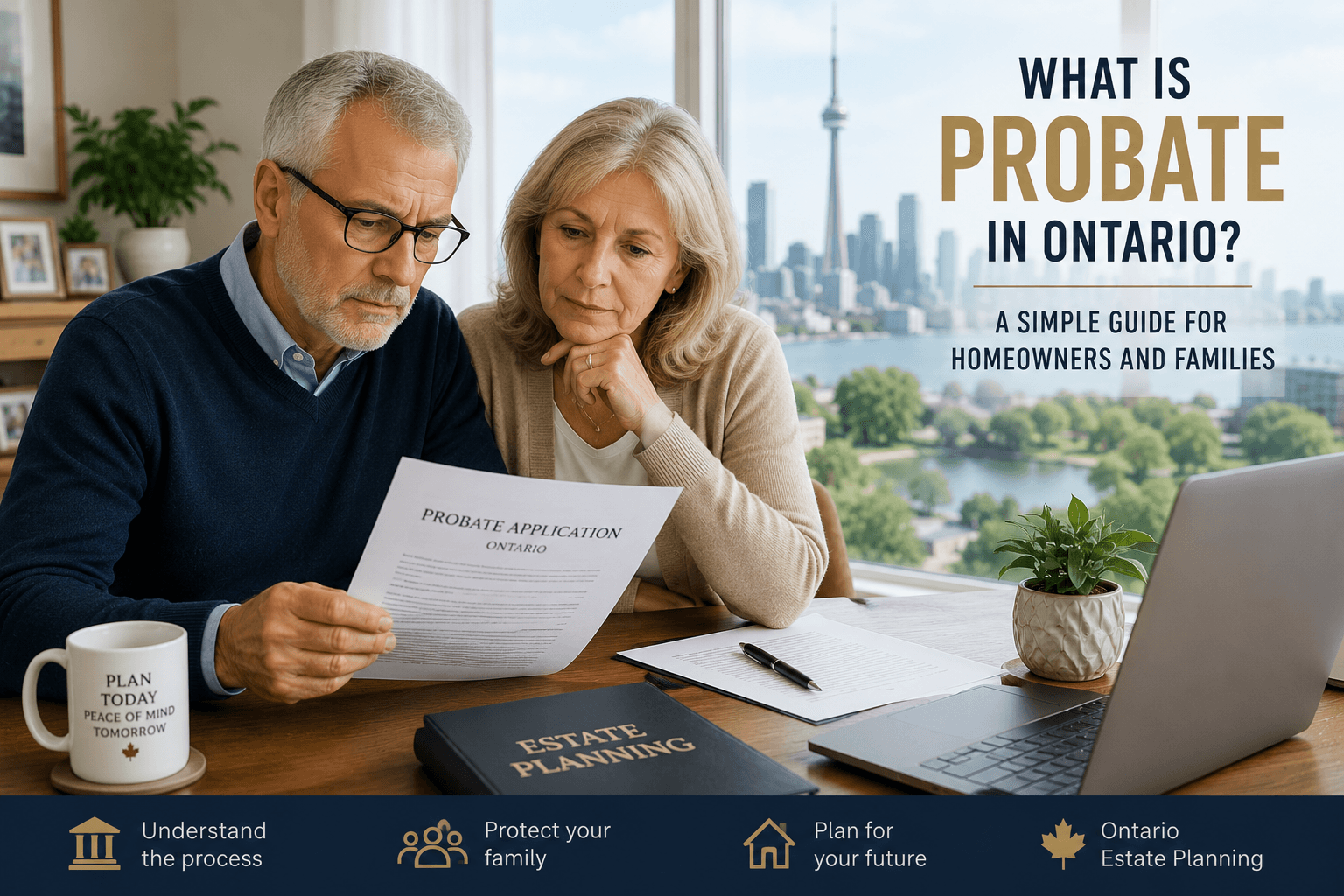 "What Is Probate in Ontario? A Simple Guide Homeowners and Families")
What Is Probate in Ontario? A Simple Guide for Homeowners and Families
Why This Topic Was Chosen
"Probate" is one of the most commonly searched estate planning terms in Ontario. Many people have heard the word but are unsure what it means, when it applies, or how it affects their family after death. Because many adults aged 50+ in the Greater Toronto Area own a home, investments, or other significant assets, understanding probate is an essential part of estate planning.
This article addresses a high-value search topic while naturally encouraging readers to consider preparing or reviewing their estate plan.
Primary Keyword: Probate Ontario
Secondary Keywords: Probate process Ontario, probate fees Ontario, estate administration Ontario, executor Ontario, Ontario wills, probate for homeowners, estate planning GTA
Search Intent: Informational with strong consultation potential.
What Is Probate in Ontario? A Simple Guide for Homeowners and Families
Probate Doesn't Have to Be Mysterious
If you have ever been involved in settling a loved one's estate, you may have heard the term "probate." For many Ontarians, it sounds complicated or intimidating. In reality, probate is a legal process that confirms the authority of the person responsible for administering an estate.
While probate is necessary in many situations, not every estate requires it. Understanding when probate applies and how it fits into your overall estate plan can help reduce stress for your family and make estate administration more efficient.
For homeowners and families throughout Toronto, Mississauga, Brampton, Vaughan, Markham, Richmond Hill, Oakville, Burlington, Pickering, Ajax, Whitby, Oshawa, Aurora, Newmarket, and surrounding GTA communities, learning about probate is an important step toward protecting your legacy.
What Is Probate?
Probate is the court process that confirms the legal authority of the person administering an estate.
In Ontario, this process is commonly referred to as obtaining a Certificate of Appointment of Estate Trustee.
Once the certificate is issued, the estate trustee (formerly known as the executor) may be able to:
- Access financial accounts
- Sell or transfer property
- Collect investments
- Pay debts
- Distribute assets to beneficiaries
Many financial institutions require probate before releasing significant estate assets.
Does Every Estate Require Probate?
No.
Some estates can be administered without obtaining probate, depending on the type of assets involved and how they are owned.
Examples where probate may not always be required include:
- Certain jointly owned assets
- Some assets with designated beneficiaries
- Estates with limited assets where financial institutions are prepared to accept indemnities or other documentation
Every estate is unique, and whether probate is required depends on the circumstances.
Why Probate Exists
Although probate can seem like an extra step, it serves several important purposes.
It provides assurance that:
- The will presented to the court is valid.
- The person administering the estate has legal authority.
- Financial institutions can rely on the court's confirmation.
- Beneficiaries have greater certainty regarding the administration of the estate.
What Happens During the Probate Process?
While every estate is different, the process generally includes:
Locating the original will.
Identifying estate assets and liabilities.
Preparing the required court application.
Filing documents with the appropriate Ontario court.
Receiving the Certificate of Appointment.
Collecting estate assets.
Paying debts and taxes.
Distributing the remaining estate to beneficiaries.
Proper record-keeping throughout the process is essential.
Probate and Your Home
For many GTA families, the family home is the largest asset in the estate.
Whether probate is required before transferring or selling a home depends on factors such as:
- How the property is owned.
- Whether there is a surviving joint owner.
- The requirements of the land registration system.
- The specific circumstances of the estate.
Because every situation is different, homeowners should seek legal advice before assuming probate will or will not be required.
Can Good Estate Planning Help?
One of the goals of estate planning is to make the administration of an estate as straightforward as possible.
Having a professionally prepared will, organized records, and clearly documented wishes can help reduce delays and uncertainty for your family.
Regularly reviewing your estate plan after retirement, major financial changes, or significant life events is also important.
Common Probate Misconceptions
"Everyone has to go through probate."
Not necessarily. Some estates require probate, while others may not.
"Probate means something has gone wrong."
No. Probate is a routine legal process for many estates.
"My spouse automatically takes care of everything."
While a surviving spouse may inherit or own assets jointly, some estate assets may still require formal administration.
Why Estate Planning Matters
Estate planning is about much more than preparing a will.
It is about making life easier for the people you leave behind.
A comprehensive estate plan can help:
- Clarify your wishes.
- Support your chosen estate trustee.
- Reduce uncertainty.
- Protect your loved ones.
- Provide peace of mind.
Frequently Asked Questions
What is probate?
Probate is the court process that confirms the authority of the person administering an estate.
Does every estate need probate?
No. Whether probate is required depends on the assets involved and the circumstances of the estate.
Who applies for probate?
The estate trustee named in the will generally applies. If there is no will, someone may apply to the court to administer the estate.
Does probate affect homeowners?
It can. Whether probate is required for a home depends on how the property is owned and the circumstances of the estate.
Should I review my estate plan?
Yes. Estate planning documents should be reviewed periodically, particularly after retirement, marriage, divorce, the birth of grandchildren, or significant changes in assets.
Serving Families Across the Greater Toronto Area
Upper Canada WILLS & Estates Ltd. assists clients throughout:
- Toronto
- Mississauga
- Brampton
- Vaughan
- Markham
- Richmond Hill
- Oakville
- Burlington
- Pickering
- Ajax
- Whitby
- Oshawa
- Aurora
- Newmarket
Virtual consultations are available throughout Ontario.
Need to Review Your Estate Plan?
Whether you are preparing your first will or reviewing an existing estate plan, taking action today can make a significant difference for your loved ones tomorrow.
Upper Canada WILLS & Estates Ltd. connects Canadians with experienced estate planning lawyers who can assist with wills, powers of attorney, and related estate planning matters.